Welcome to our new site

Welcome to Sustainable Bellingham’s new website!  We are actively building it and migrating content so please bear with us.  Thank you for your patience.

Recommended Links, Janurary 28, 2012

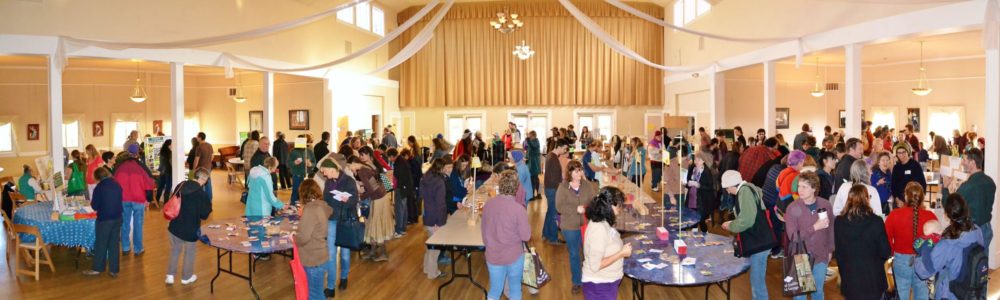
This is an exciting weekend for Sustainable Belliingham. We are holding our Community Seed Day on Sunday at the Majestic in Downtown Bellingham just south of the co-op on Forest Street. In prior years we called this the Seed Swap, but it created some confusion from those attending. “What if I don’t have seeds? Can I still participate?” was commonly asked.  So we changed the name to Community Seed Day in hopes of eliminating confusion.

We live in precarious times, and if you are not concerned with the state of our planet’s food supply, you should at least be aware of it. Learning how to grown your own vegetables, generating and saving your own seeds, and meeting those in the community that actively share these interests is a wonderful way to spend a Sunday afternoon in January.

Come, listen, share, and meet fellow seed savers and gardeners in Bellingham. We are lucky to have such a deep pool of resources from which to draw, as well as active seed savers in the community. Every seed tells a story and carries a legacy with it; a symbol of life in the simplest and purest form. If you have no seeds to offer, you are welcome to participate. We only ask that you take what you will use.

We all look forward to seeing you at this popular event.

-Jeff Westcott, Sustainable Bellingham

 Items of Note:
Compiled Saturday January 28th by Shannon Maris

4th Annual Community Seed Day
Getting Seeds into the Hands of the People!

** Free and Open to the Public **
Who Should Attend: All
who wish to learn about, share or receive seeds to grow!
When:
Sunday, January 29th, 2012, 1:00-4:00pm
Where:
The Majestic, 1027 North Forest Street, Bellingham
Presentation:
 Basic Seed Saving by Celt Schira – 2:00 – 3:30 pm

Cheryl Gough will also be in attendance. She is the author of “The Complete Guide to Saving Seeds” and will be there selling and signing her books.

 You are welcomed to bring/share:

There is a chance to win our right to know about GMOs in our food in Washington State, but we must act fast!

Bills to label GMOs have been introduced in the House and Senate.

  • SB 6298 is scheduled for public hearing in the Senate Committee on Agriculture and Water & Rural Economic Development at 10:00 AM on Thursday, January 26, 2012.
  • HB 2637 is scheduled for public hearing in the House Committee on Agriculture & Natural Resources at 8:00 AM on Friday, January 27, 2012.


Here’s what you can do:
1. Write your state reps to ask them to cosponsor the bills.
2. Write your state senators to ask them to cosponsor SB 6298.
3.
Call your state reps to ask them to cosponsor HB 2637.
4.
Call your state senators to ask them to cosponsor SB 6298.
5.
Come to the hearings in Olympia! RSVP for a bus ride from Seattle to Olympia Thursday. RSVP for a bus ride from Seattle to Olympia Friday.
6.
Donate to the Organic Consumers Fund so we can reimburse the travel  costs of supporters who couldn’t otherwise attend the hearings.
7.
Learn more and get involved at GMOFreeWashington.com.

We need your help to get these bills passed!

Thanks!
Alexis Baden-Mayer
Organic Consumers Fund

Birchwood Garden Club’s February Meeting
Date:
  Wednesday, February 1st
Time:
  7:00 P.M.
Where:
  Whatcom Museum Rotunda Room
121 Prospect Street
Bellingham, WA  98225
Topic:
  Birchwood Garden Club member, Judy Boxx will be speaking on, “Water and Art in the Garden.”  Judy has been a member of the Mt. Baker Garden Club for over 40 years as well as a Birchwood Garden Club member and has been a Master Gardener for 7 years.  This will be a fun program with lots of great ideas that Judy has used in her own garden as well as ideas for the art she has made from cement, stained glass and wood that she has decorated her yard with.  Please join us!!!

India Gets into Urban Composting with Cool Terra Cotta Pots
Bangalore produces over 2000 to 3000 tonnes of waste everyday. The centralized government composting plant can handle only 500 tonnes per day. The rest reaches dumps that are illegal. In just five years the Daily Dump team has helped over 4,500 customers in Bengaluru to compost household waste in terracotta pots, and these customers keep around 5,522kg of organic waste out of landfills every day. What is remarkable about Poonam Bir Kasturi’s waste management process is its simplicity, and the cleverly designed terracotta pots add a touch of earthiness to it.

Beware of Agent Orange Burgers
Now, as the Environmental Protection Agency is set to release the first part of the dioxin risk assessment it’s been working on since 1985, food industry lobbyists are attempting to block EPA action yet again. Why? The EPA is likely to confirm what the FDA has reported:

“Although dioxins are environmental contaminants, most dioxin exposure occurs through the diet, with over 95% coming through dietary intake of animal fats.”

The food industry doesn’t want you to know that you can easily exceed the daily dioxin limit proposed by the EPA by consuming a single large meal of non-organic animal products. Most of all, the food industry doesn’t want to have to take responsibility for the dioxin contamination. If they did, they would have to submit to common-sense food safety measures, like those embraced by the organic industry that ban toxic pesticides and slaughterhouse waste from animal feed.

Re-skilling and Health Options via Community Food Co-op

Community Acupuncture with Ed Layton, LAc
Thursday, February 2, 6:30–8 pm
Come learn about the Community Acupuncture movement, whose goal is to make acupuncture more affordable and accessible through offering acupuncture treatments in community settings for a sliding scale ranging from $15 to $40. Ed Layton, acupuncturist from HamsterPuncture leads this informative, informal evening discussing acupuncture’s role in “the calmest revolution ever.” Free event, registration requested/Downtown Co-op/register at Co-op

Make Your Own Hard Cheese with Mark Solomon
Saturday, February 4, 1–4 pm
Mark Solomon of Seattle teaches how to make cheddar and gouda—two great cheeses that exemplify different hard cheese-making techniques and provide a window into the production of many cheeses. As we make the cheeses, we’ll talk through the steps and delve into cheese chemistry. We’ll discuss sources of cheese-making equipment, starter cultures, and cheese molds with an emphasis on simple low-tech solutions. We’ll also eat lots of homemade hard cheeses and evaluate them. $55 members and non-members/Cordata Co-op/register at WCC (360-383-3200)

Introduction to Fermented Foods with D. Marith, T. Kanoa, and C. Witham
Thursday, February 9, 6–8 pm
Learn all about enzyme-rich fermented foods and their health-promoting properties. The class will include a demonstration on how to make sauerkraut, kim chi, and other pickled veggies. Traditional diets all over the world have featured a high content of food enzymes and beneficial bacteria developed through fermentation. The instructors are members of the local chapter of the Weston A. Price Foundation. $29 members and non-members/Cordata Co-op/register at WCC (360-383-3200)

Stir-Fried Swiss Chard with Pine Nuts and Balsamic Butter
A stir-fry that uses the leaves and the stems of Swiss chard

By Susie Middleton

“It may seem strange to stir-fry, rather than sauté, Swiss chard, but I think the stir-fry pan is handy for cooking both the stems and leaves (as well as for browning the nuts). Often recipes will call just for the leaves of Swiss chard, but I think it’s a shame to waste the stems,” says Susie Middleton, Connecticut chef and author of Fast, Fresh and Green: More Than 90 Delicious Recipes for Veggie Lovers (Chronicle Books, 2010).
Ingredients:

• 1 teaspoon balsamic vinegar
• 1 teaspoon soy sauce
• 1/2 teaspoon dark brown sugar
• 12 ounces ‘Bright Lights’ Swiss chard (do not trim)
• 1 tablespoon peanut oil
• 3 tablespoons pine nuts
• Kosher salt
• 2 teaspoons finely chopped garlic
• 1 tablespoon unsalted butter
Directions:
1.
In a small bowl, combine the balsamic vinegar, soy sauce, and dark brown sugar.
2.
Pull or cut the stems away from the chard leaves. Cut or rip the leaves into 2- to 3-inch pieces and wash and dry them well. Rinse the stems and slice them crosswise into 1/4-inch pieces.
3.
Heat the peanut oil in a large (12-inch) nonstick stir-fry pan over medium heat. When the oil is hot (it will  loosen and spread out), add the pine nuts and cook, stirring almost constantly, until they’re all lightly browned, 1 to 2 minutes. Watch carefully, because they brown quickly. Remove the pan from the heat and use a slotted spoon or spatula to transfer the pine nuts to a heatproof plate or pan, leaving behind as much fat as possible.
4.
Return the pan to the heat, add the chard stems and a pinch of salt, and cook, stirring occasionally, until shrunken and beginning to brown lightly, about 5 minutes. (They will begin to crackle in the pan as moisture evaporates.) Add the garlic and stir-fry just until fragrant, a few seconds. Add all of the chard leaves and 1/4 teaspoon of salt and, using tongs, toss the chard leaves in the pan just until wilted (30 to 45 seconds).
5.
Scrape the balsamic mixture into the pan, stir, and remove the pan from the heat. Add the butter and toss and stir until it’s melted. Fold in half of the pine nuts. Transfer the chard (including all the stems and liquid) to a small serving bowl and garnish with the remaining pine nuts.
Serves 2 to 3

Recommended Links, January 15, 2012

Introduction to Beekeeping Course
Time
:Tuesday Evenings, January 17th through March 6th, 709pm
Location
: Fairhaven Library, Fireplace Room, 1117 12th Street,
Organized By
: Jody Gerdts
This course is designed for new and beginning beekeepers focusing on beekeeping fundamentals essential for keeping bees healthy and happy. Topics covered:
•  Natural history of pollination
•  Honey Bee biology
•  Hive management techniques
•  Pest and disease biology
•  Integrated pest management techniques
•  Hive products
The course will be taught through a combination of lectures, demonstrations, guest speakers, and video clips.

2012 Country Living Expo & Cattlemen’s Winterschool
Saturday, Jan. 28th at the Stanwood High School. This is an amazing day of over 150 classes. Prime rib or veggie lunch included. Registration is $60 per person, and youth ages 12-18 are only $10 for the day. Classes include: Beef, Bees, Country Living, Equine, Fiber, Foods, Horticulture, Poultry, Sheep & Goat and Swine

Whatcom Conservation Dist. 19th Annual Plant Sale  
Saturday, March 24th, 2012, 9am-2pm
Whatcom Community College at the Roe Studio
237 W. Kellogg Rd., Bellingham

Urban Agriculture Rezoning in Boston
Mayor Thomas M. Menino and the City of Boston want to establish an environment in which all of our citizens-particularly the most underserved-have direct access to locally produced fresh food, the ability to produce food for themselves, and access to education and knowledge about healthy eating.

A Case-Study Based Exploration of Seattle Urban Agriculture Projects
Currently there are 103 urban food production sites in Seattle.1 These include urban farms, P-Patches, community gardens, and school gardens. From the 103 sites, however, only 10 are functioning as Urban Farms. While P-Patches, community gardens, and school gardens are an important component of Seattle’s food system, urban farms have the potential to make a large impact on the local food supply system. Within this report we focus on existing urban farming case studies to better understand how these farms function. (See the report here.)

California Farm Academy Aims to Produce Next Generation of Farm Entrepreneurs
The average Californian farmer business owner is 58 years old. These entrepreneurs produce crops valued at $20 billion per year. The 22-week program, priced at $1,950, is designed for those with busy schedules, with courses offered in the evening and on weekends for a total of seven to 10 hours of class and training time per week. The cost includes printed materials, machinery, tools and supplies.

Young Urbanites Put Down Roots in Organic Farming in BC
“I think there’s a growing demand and I think it’s going to keep growing, but it’s still a really hard way to make a living.”

McMillan now runs the farm with fellow UBC Farm practicum graduates Simone MacIsaac, 33, and Niki Strutynski, 32. Having cleared the hurdle of securing land, labour is now the main limitation to business growth for Rootdown, which grossed $80,000 in sales last year. “The market is definitely there. People are interested in more than we can produce, but we can’t physically do any more than we can do,” says McMillan, noting  that Rootdown hosted several volunteer workers in 2011 to help lighten the load.

New World Crops – Order Now for 2012!
By the way this fellow looking for folks to trial some of his crazy tomato varieties…. check ‘em out:

“I (Rob) am currently looking for someone interested in growing out tomatoes on contract, to either sell to a bigger seed company and give us our cut, or to use in some other way and give us back the seeds. The purpose is to get more seed of our best varieties available to you, in a more efficient manner than our current system, so that we can handle it with our limited human resources. We have a huge backlog of varieties that could be grown out. The intent is to make this a profitable and worthwhile venture for all parties involved. We believe in ‘win-win or no deal’, and will do what it takes from our side to make it happen.”

But he’s best known for his collaboration with Tater-Mater…. for his potatoes and specifically ‘potato seed’:

“True seed is a godsend to home growers because it creates the option of rotating potatoes out completely before disease builds up, and saving the seeds in storage for later planting. It’s also a more sanitary and economical way to buy and ship genetic resources.”

Potato Varieties you will only see from them…from 40+ years of local research and breeding.

And a few more other items: Everything else like dry beans, greens, root crops and squashes…

Keep up the awesome work/labor of love, fellas!

Blend Your Own Seed-Starting Mix - How to make your own seed-starting mix.
April Johnson, landscape and greenhouse coordinator at the Rodale Institute near Kutztown, Pennsylvania, grows literally thousands of organic vegetable, flower, and herb transplants every year. Many of her seedlings end up in the Institute’s production and display gardens; others are sold to local gardeners at two spring fundraisers. After many years of experimenting with recipes for indoor seed-starting mixes, Johnson has settled on this general formula.
•  4 parts screened compost
•  1 part perlite
•  1 part vermiculite
•  2 parts sphagnum peat moss and/or coir
To keep the dust down, lightly moisten the ingredients before blending them thoroughly in a dishpan or wheelbarrow.

This mix strikes a balance between moisture retention and drainage, both of which are necessary for seedlings. “Regulating the moisture is key,” Johnson says. “It’s easy for the soil to stay too wet, and that can lead to damping-off.” Damping-off is a fungal disease that causes newly germinated seedlings to topple over and die. Some flower seedlings—Johnson mentions pansies, snapdragons, ‘Gem’ marigolds, and lisianthus—tend to be more sensitive to too much moisture. For those, she makes a special batch of the mix, using less compost and replacing coir with peat moss. Sphagnum peat moss and perlite tend to lighten the mix and allow it to drain more quickly. Compost, vermiculite, and coir increase moisture retention.

The compost in Johnson’s mix is made mostly from shredded leaves and other garden debris—but she avoids any organic materials that might introduce weed seeds to the compost. Having compost in the mix means that seedlings  rarely need to be fertilized until they are moved outdoors to the garden; the compost provides a constant mild feeding. Compost also counters the natural acidity of peat moss. In mixes that don’t include compost, add 1/4 teaspoon of lime for every gallon of mix.

A Great Link: Beginning Farmers – Full of useful information!

Asian Chicken Salad
Serves 6 to 8
Jenifer loves to make this salad with the boys. If there’s time, she’ll throw it together a few hours ahead of dinner, but she makes sure to add the herbs at the last minute or they lose the wonderful aromatic qualities that they bring to the salad in the first place. Serve more herbs in bowls for everyone to add as they like.
* 1 head cabbage, thinly sliced
* 4 3-4 ounce packages dried Ramen noodles, seasoning removed, broken into bite-sized pieces
* 2 cups or so diced cooked chicken
* 1/4 cup hoisin sauce
* 3 tablespoons rice wine vinegar
* 3 tablespoons soy sauce
* 1 tablespoon fish sauce
* 2 teaspoons toasted sesame oil
* 1 teaspoon sambal chili paste
* 2 pinches sugar
* 1 1-inch piece ginger, peeled and grated
* 6 green onions, thinly sliced
* 1/4 cup peanuts, toasted
* Leaves from 1 bunch fresh basil, sliced
* Leaves from 1/2 bunch fresh cilantro, sliced
* Leaves from 1 bunch fresh mint, sliced
1.
 Mix together the cabbage, Ramen noodles, and diced chicken in a large bowl. Hands are welcome.
2.
 In a small bowl or jar, mix the hoisin sauce, vinegar, soy sauce, fish sauce, sesame oil, sambal chili, sugar, ginger, and green onions. Pour over the cabbage mixture and toss really well to coat all the ingredients. You can do this a few hours ahead so that the seasoned sauce will moisten the dried noodles.
3. 
Just before serving, sprinkle the salad with the peanuts and some of the basil, cilantro, and mint. Have bowls of the herbs on the table so everybody can add what they like.

Lacy Almond-Orange Cookies
Makes 24
Prep Time:
 10 minutes
Total time:
 20 minutes (plus cooling)
Good to Know:
 A mix of sugar and honey in these citrusy cookies satisfies a sweet tooth, yet each thin, delicate cookie has only forty-four calories. Go ahead, have two.
* 1/2 cup slivered almonds
* 3/4 teaspoon anise or fennel seeds
* 4 tablespoons (1/2 stick) unsalted butter
* 1/4 cup sugar
* 3 tablespoons honey
* 1/2 teaspoon coarse salt
* 1/4 cup all-purpose flour
* 1 tablespoon finely grated orange zest
Preheat oven to 375°F with racks in middle and lower thirds. In a food processor, pulse almonds and anise seeds until coarsely ground. Transfer mixture to a small saucepan. Add butter, sugar, honey, and salt. Bring to a boil over medium-high heat, stirring once to combine ingredients as butter melts. Boil 1 minute; remove from heat. Stir in flour and zest.

Working quickly, drop batter by teaspoonfuls, 2-1/2 inches apart, onto parchment-lined baking sheets. Bake until golden brown, 6 to 8 minutes, rotating sheets halfway through. Let cool completely on sheets on wire racks. (Cookies can be stored between sheets of parchment in airtight containers up to 2 days at room temperature.)